
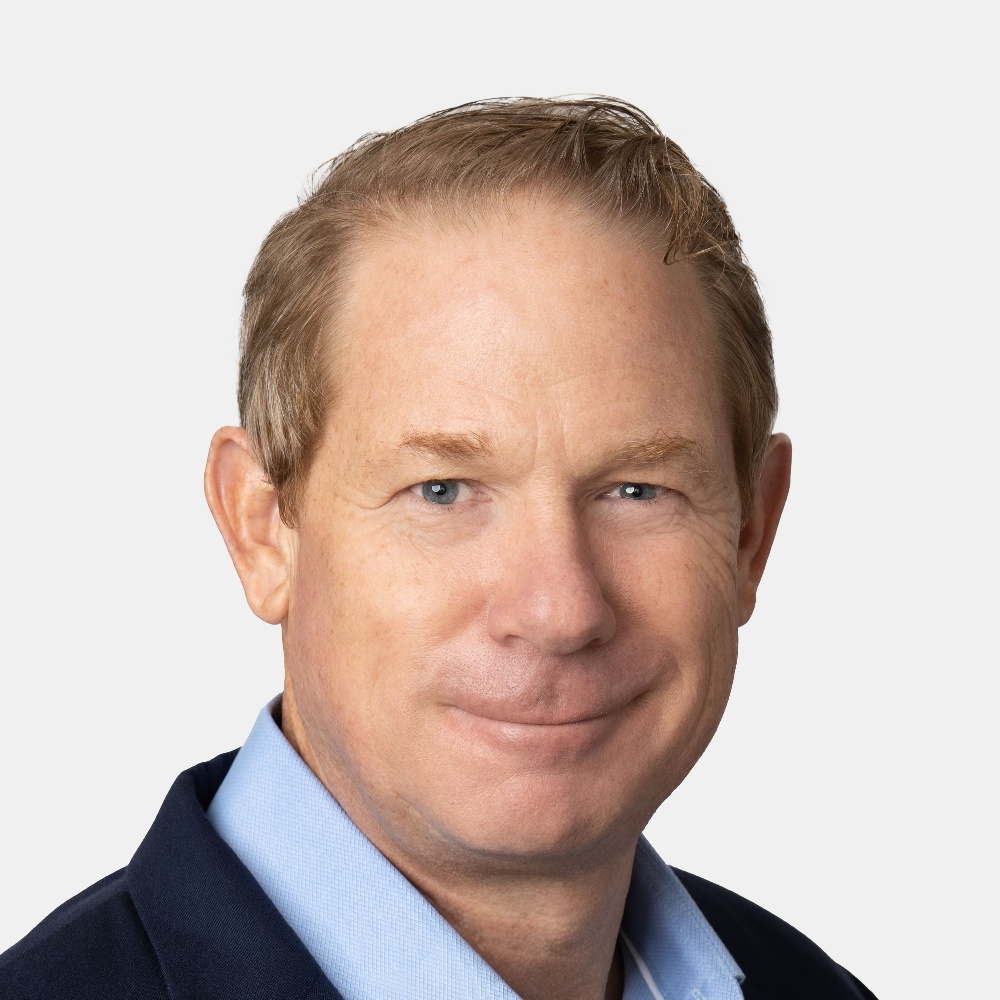
- Responsible for new idea generation; portfolio construction; risk management; due diligence
- 25+ years overseeing concentrated small-cap portfolios, on behalf of the most sophisticated allocators in the United States
- Previously: Founder, Endowment Capital Group; Portfolio Manager, Downtown Associates; Analyst, W.H. Newbold’s Son & Company
- University of Pennsylvania, Wharton School, B.S. 1986
- Married to Isabella, 3 sons, 3 daughters, 2 dogs
Ensign Group (ENSG)
by Owls Nest Partners on Dec 10, 2018
Ensign Group (ENSG) - Purchased Q4 2018
Backtracking just a little: in discussing FND above, we stated how we want to own companies that “thrill” their customers. Well, ENSG is a fantastic operator with great outcomes in the long-term care and skilled nursing industries. And while they may have a significant impact on the quality of life of their end customers, “thrill” is probably too strong. No one tweets “just another awesome day here in Pocoroba Falls Nursing Home”, although perhaps they should if the nursing staff is helping them get healthier. We also like to talk about “what a great business” this is that we own (i.e. the less than two-year cash-on-cash payback on FND stores). Well, operating nursing homes is demonstrably not a “great business.” It is a very tough business. I am still amazed by the record time it took the industry’s largest player in 2000 to go from opening its new, gleaming corporate HQ to going bankrupt: about 12 months. Not an industry for the operationally sloppy or the debt-laden. And therein lies the opportunity for ENSG as it expands with its proven approach in this enormous and growing industry.
With a strategy refined over the last 20 years that combines centralized services and support and entrepreneurial, sharp and properly incentivized facility and local market management, ENSG has earned its reputation as the industry’s best operator. To an extent, ENSG is borrowing a page from the early days of another long ago – and once again – holding, Allegiant Travel. Rather than taking on debt to buy nice, new shiny planes, ALGT bought used aircraft for the fractions of the cost and put them to work on very underserved routes with great economics (about a two-year payback per plane). This flexible model allowed them to remain profitable and expand during the great airline crisis of 2008 when first high fuel, and then second, a tanking business travel market crushed legacy airlines.
Ensign buys underperforming and undercapitalized facilities, often “onesies and twosies”, for very depressed prices, mostly well below replacement cost. Whenever possible, they buy the physical facility as well as the business. They immediately begin the transition to their model by upgrading the facility and systems and bringing key services in house, most importantly physical therapy/rehabilitation (PT). At this point, they can develop better relationships with referral sources, deliver better outcomes, increase their census (% of beds occupied), and increase the rate at which they get paid by providing more services (such as PT). If properly run, the economics begin to look OK. But wait, there’s more. As they develop these relationships with referral sources, they can expand the continuum of care by developing very profitable and asset light home health and hospice businesses. Playing into this is the inexorable trend to get patients to the lowest cost facility. So, nursing homes are getting sicker and sicker patients, which utilize the in-house skilled nursing capacity and get reimbursed at significantly higher rates. Then, at some point this patient will be ready for home care and ENSG has that teed up. Now the economics begin to look good.
But wait there’s more. This is the page out of Warren Buffet’s playbook of sorts. I’m no expert on Berkshire Hathaway, but it seemed that for a reasonable time the genius of Berkshire’s performance has not been the stock picking (he acknowledges how size is the enemy of performance so we can cut him some slack), but rather the brilliant free leverage from the insurance float. Ensign does something similar. When they buy a facility, that
building is tired and associated with a business that is barely profitable, if it all. Hence, the building isn’t worth much. But a few years into ENSG’s ownership and management, the building is upgraded and associated with a profitable business. Suddenly with that value added, it becomes an asset that can comfortably be lent against at attractive rates. And, voila, ENSG can get its original money back and recycle that into the next project without
having to issue dilutive equity and all the while maintaining the strongest balance sheet in the industry. Now the economics look really good.
And to revisit an earlier theme, ENSG is poised as a beneficiary of that favorite topic of mine – financial engineering gone wrong. This is a tough business with occasional moments of decent profitability (this is not one of those “occasional moments”, by the way). A decade or so ago when the industry last had decent profitability, the friendly investment bankers charged in to explain how they could create shareholder value. The idea was to
spin off each operator’s real estate into a REIT because the cap rates were so low, and they had the remarkable ability to sell it. Given the low cap rates many of the leading operators did exactly that, and to maximize that windfall they agreed to rent escalators that would please the REIT investors. In doing so, they sealed their fate as operators. Soon a difficult environment descended and the rents became untenable, resulting in these leading
players retaining investment bankers to help them go through bankruptcy, sell off assets, restructure leases or employ other survival tactics. These financial engineers are clever, indeed – they made themselves lots of fees! Anyway, perhaps because management of ENSG owns north of 15% of the company and because they want the most flexible balance sheet to execute the enormous opportunity ahead of them, ENSG was more immune to
the siren song of clever bankers. Yes, they created a REIT too, but they refused to put in onerous escalators. As a result, their REIT has done fine (no tenants going bankrupt), and they have the financial strength and operational profitability they need in order to party on. Please appreciate the enormity of their opportunity. Despite being the strongest guy in the space, their 200 facilities constitute about ~1% of this incredibly fragmented industry. And they are even less of the fast-growing home health care business. The runway is never ending.
We have gotten involved with ENSG now because the industry’s challenges – stagnant census growth, reduced growth in reimbursement, terrible balance sheets – has made it largely uninvestable. Further, ENSG has had to work through some issues of their own as they finish digesting (with a little heartburn along the way) a couple years of particularly aggressive growth that strained their management and execution. And now the industry
faces a new payment methodology in “patient driven payment method” (PDPM). PDPM introduces risk and outcomes measurement into a mix that was straightforward fee-for-service before. It creates opportunities for those who can really manage the care, but it requires a huge upgrade in systems and will clearly benefit those of a certain scale who can most easily develop and implement best practices and spread an ever-increasing overhead burden across many facilities. This huge change creates margin opportunity in the long run for ENSG and will create an enormous backlog of eager/distressed sellers to fuel ENSG’s near and intermediate term growth.
Interestingly, no one reading this will recall the great “baby bust” associated with the Great Depression, when that ultimate consumer discretionary item – a child – became a much scarcer item. But it was a very real event. Fast forward 85 years, and the echo of that event is a decline in census in long-term care that has been a recent plague. But that is on the verge of stabilizing and then giving way to the mother of all demographic trends (baby
boomers), when it will be very easy to imagine a scarcity of long-term care beds especially since regulation and low profitability have made new construction economically unfeasible. Buy your long-term care insurance. Or better yet, up your investment in Owls Nest Partners to help you cope with the costs your loved ones will face.
Disclaimer
In General: This disclaimer applies to this document and the verbal or written comments of any person presenting it. This document has been prepared by Owls Nest Partners IA, LLC as Investment Adviser (the “Adviser”) of Owls Nest Partners Concentrated Long Only Strategy (the “Strategy”). By receiving this document you acknowledge that you are an investor in the Strategy, or a prospective investor who is known to the Adviser, and that you meet all regulatory definitions of “Accredited Investor” and “Qualified Client,” in order to be considered a prospective client of the Adviser. The information included herein reflects current views of the Adviser only, is subject to change, and is not intended to be promissory or relied upon. There can be no certainty that events will turn out as the Adviser may have opined herein.
No offer to purchase or sell securities: This document does not constitute an offer to sell (or solicitation of an offer to buy) any security and may not be relied upon in connection with the purchase or sale of any security.
No reliance, no update and use of information: You may not rely on this document as the basis upon which to make an investment decision. To the extent that you rely on this document in connection with any investment decision, you do so at your own risk. This document is being provided in summary fashion and does not purport to be complete. The information in this document is provided you as of the dates indicated and the Adviser does not intend to update information after its distribution, even in the event the information becomes materially inaccurate.
Knowledge and experience: You acknowledge that you are knowledgeable and experienced with respect to the financial, tax and business aspects of this presentation and that you will conduct your own independent financial, business, regulatory, accounting, legal and tax investigations with respect to the accuracy, completeness and suitability of this information, should you choose to use or rely on this document, at your own risk, for any purpose.
No tax, legal or accounting advice: This document is not intended to provide and should not be relied upon for (and you shall not construe it as) accounting, legal, regulatory, financial or tax advice, or investment recommendations. Any statements of U.S. federal tax consequences contained in this document were not intended and cannot be used to avoid penalties under the U.S. Internal Revenue Code or to promote, market or recommend any tax-related matters addressed herein.
Confidential information and distribution: By accepting receipt or reading any portion of this document, you agree that you will treat all information contained herein confidentially. Any reproduction or distribution of this document or any related marketing materials, as a whole or in part, or the disclosure of the contents hereof, without the prior written consent of the Adviser, is prohibited.
Suitability: Any investment program involves a high degree of risk and is suitable only for sophisticated investors who meet certain other suitability standards.
Investment strategies, market conditions and risk disclosures: Notwithstanding the general objectives and goals described in this document, readers should understand that the Adviser is not limited with respect to the types of investment strategies it may employ or the markets or instruments in which it may invest. Over time, markets change and the Adviser will seek to capitalize on attractive opportunities wherever they might be. Depending on conditions and trends in securities markets and the economy generally, the Adviser may pursue other objectives or employ other techniques it considers appropriate and in the best interest of the Fund. No representation or warranty is made as to the efficacy of any particular strategy or actual returns that may be achieved. The Strategy is subject to investment risk, including possible loss of the entire principal amount invested. Investors must be prepared to bear the risk of a total loss of their investment.
Projections: This document may contain certain “forward-looking statements,” which may be identified by the use of such words as “believe,” “expect,” “anticipate,” “should,” “planned,” “estimated,” “potential” and other similar terms. Examples of forward-looking statements include, but are not limited to, estimates with respect to financial condition, results of operations, and success or lack of success of the Strategy’s investment strategy. All are subject to various factors, including, but not limited to general and local economic conditions, changing levels of competition within certain industries and markets, changes in interest rates, changes in legislation or regulation, and other economic, competitive, governmental, regulatory and technological factors affecting a portfolio’s operations that could cause actual results to differ materially from projected results.
PAST PERFORMANCE IS NOT INDICATIVE OF FUTURE RESULTS
Disclosures
- All “portfolio” or “fund” information presented is for the Owls Nest Partners Master Fund Ltd. (the “Fund”). Such data represents preliminary, unaudited, figures that are subject to change. The Fund’s administrator prepares final month-end and quarterly performance figures for each share class of investors. Such returns were not yet available at the time this document was distributed, therefore, the Adviser has calculated its own internal, unaudited estimates of Fund performance, net of fees and expenses. Finalized Fund returns will be distributed by the administrator directly to Fund clients only and may be different from the returns presented herein. For further information regarding Fund performance, please contact the Adviser at info@owlsnestpartners.com, or by calling 484-352-1110.
- The Russell 2000 Total Return Index (the “Benchmark”) is a broad market index that is presented for comparative purposes as the performance benchmark to the Fund. The Benchmark is an unmanaged index consisting of the smallest 2000 stocks in the Russell 3000 Index. The stocks are issued in the United States, and the Benchmark includes the reinvestment of all dividends and income. Because the Benchmark is unmanaged, it assumes no transaction costs, management and performance fees, or other expenses. Unlike the Fund, it contains only domestic companies and is rebalanced monthly. Therefore, while the Benchmark contains publicly traded companies, it does not purport to represent an exact performance comparison to the Fund. It is not possible to invest directly in an index, such as the Benchmark.