
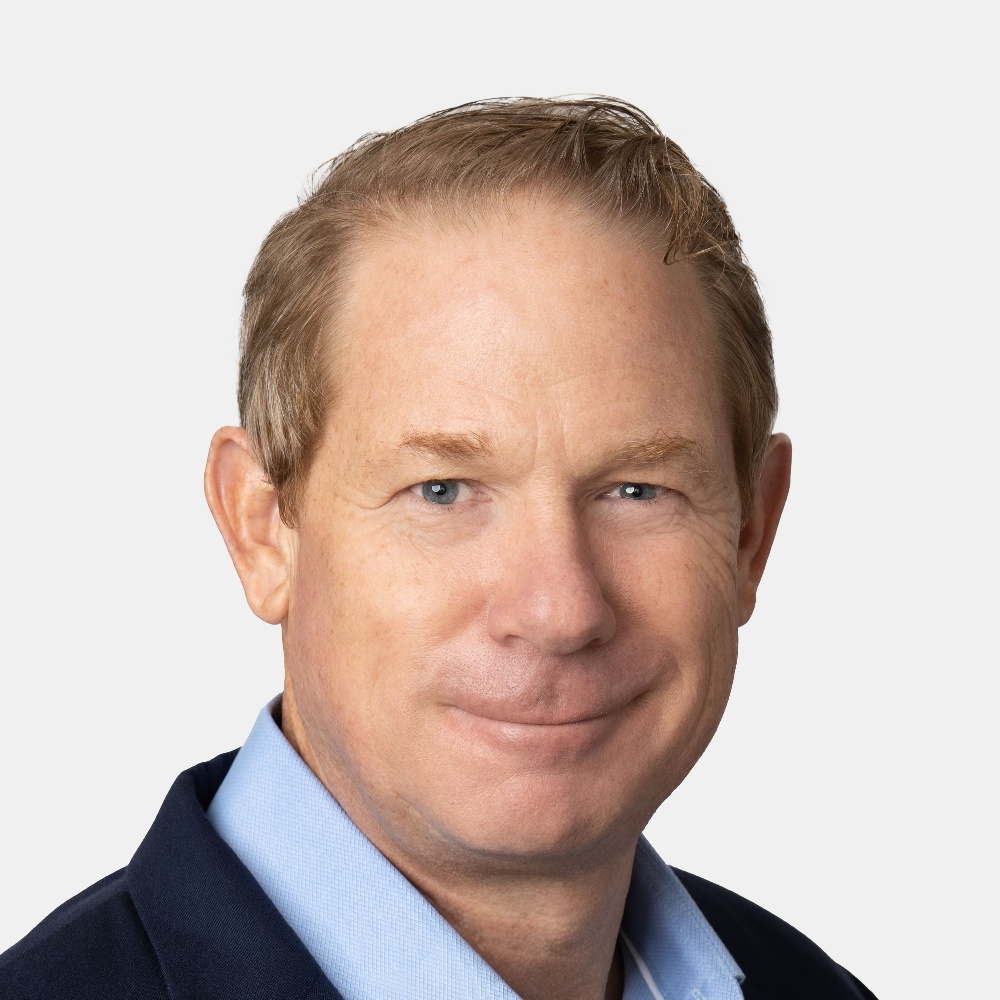
- Responsible for new idea generation; portfolio construction; risk management; due diligence
- 25+ years overseeing concentrated small-cap portfolios, on behalf of the most sophisticated allocators in the United States
- Previously: Founder, Endowment Capital Group; Portfolio Manager, Downtown Associates; Analyst, W.H. Newbold’s Son & Company
- University of Pennsylvania, Wharton School, B.S. 1986
- Married to Isabella, 3 sons, 3 daughters, 2 dogs
by Owls Nest Partners on Jun 30, 2021
.png?width=672&height=556&name=Owls%20Nest%20Partners_Long%20Only%20Letters_2021.pdf%20-%20Personal%20-%20Microsoft%E2%80%8B%20Edge%207_27_2023%2011_33_36%20AM%20(2).png)
[1Past performance is not indicative of future results. Performance presented from inception through September 2020 is for a representative account of the Owls Nest Partners Concentrated Long Only SMA strategy (the “Strategy”). As of October 2020, performance is for a composite of accounts managed in accordance with the Strategy (the “Composite”). Please see the Disclosures at the end of this document for further information with regards to performance.
Quarterly Attribution:
Most of our holdings were positive contributors in the quarter. The leading gainers, in order of largest impact to smallest, were Progyny (PGNY), Goosehead Insurance (GSHD), Avalara (AVLR), and Armstrong World Industries (AWI). The negative contributors, in order of largest impact to smallest, were Allegiant Travel (ALGT), Grand Canyon Education (LOPE), Ensign Group (ENSG), and Interactive Brokers (IBKR). In general terms, quarterly stock performance had little to do with the fundamental performance of the companies - which was solid to exceptional across the board - but was instead driven by a rebound of those stocks that had been recent laggards.
Portfolio Adjustments:
The most significant changes in the portfolio were the addition of Datto Holding Corp. (MSP) and the sale of Grand Canyon Education. These moves are discussed in more detail below. We also added to our Goosehead Insurance position and continued building out our Repay Holdings (RPAY) position. We also pared back our Progyny position into the quarter’s strength.
Grand Canyon Education (LOPE):
As we introduced you to Grand Canyon Education in our Q1 2019 letter, we boldly began, “The historically entrenched and slow-moving world of post-secondary education is changing dramatically in reaction to the student debt crisis, a changing economy which needs different skills, technology available to educators, and changes in students’ tastes and influencers.” We got that wrong. Way wrong. It might be changing faster than its historic glacial pace, and it might be true that the pressures are building such that a day may come when the higher education industry will change, although global warming is likely to end the world first. What would have been accurate to write is “if the higher education market was a rational market free of governmental and political distortions, and if the industry’s leaders were imbued with the instincts and passions of a growth-oriented CEO as opposed to those of a consensus-seeking teacher, the historically entrenched and slow-moving world of postsecondary education would be changing dramatically in reaction to the student debt crisis, a changing economy which needs different skills, technology available to educators, and changes in students’ tastes and influencers.”
In July 2018, when Grand Canyon Education (the “Company”) successfully separated from Grand Canyon University (the “University”), it restored the University to a not-for-profit tax-exempt status, and it created the Company as an independent online program manager (OPM) able to serve other client universities in addition to Grand Canyon University. After nearly two decades of investing in technology and automation and refining their offering, the Company stood as the only OPM with a demonstrated ability to deliver quality undergraduate or graduate education at scale and at a tuition price point below $10,000. Further, the Company’s late 2018 acquisition of Orbis Education was brilliant as it gave them a unique, proven hybrid (ground and online) Accelerated Bachelor of Science in Nursing program, and it was already rolled out to more than a dozen client universities including Northeastern, Loyola Chicago, and Xavier. We loved the acquisition in large part because all the clients loved their relationships with Orbis. The programs had great outcomes, allowed the schools to expand their nursing programs and made the universities money right out of the gate that they would never otherwise see. In a nation that needs over a million new nurses over the next decade, Orbis seemingly had an incredible opportunity to grow across the nation and being part of the Company gave Orbis the chance to learn from the industry’s largest and most efficient player and would accelerate growth by removing any financing obstacles. The Company’s offering was unique and unbeatable. They would absorb all upfront costs and deliver a revenue share to the partner universities for whom there would be essentially no costs, and they were the only provider with proven scale, proven quality outcomes, high student and client satisfaction, and the ability to deliver at low price point.
As we just discussed above, we see eye to eye with management teams that act boldly to seize opportunity and proactively snuff out threats. That mindset turned out to be our kryptonite in this case. Given the opportunity that the nascency of online undergraduate education presents and given what for many schools would seem to be an existential threat from the ability to dramatically lower the cost and price of delivering an education through asset light, technology-enabled delivery model, we assumed that many university leaders would turn to the Company for help. Some might come to play offense and maximize their current lead and brand, and some might come for defense because they could see the writing on the wall if they didn’t evolve quickly. All would come because they would recognize they did not have the skillset in-house and would not have the appetite for the risk of moving online without a proven partner and because they would not want to absorb the years of losses while the programs were built out and money was spent to attract new students.
In the two years since we posited this brave new world, the University has continued to grow exceptionally well and almost exactly in-line with our goals. It’s a great success story. The ground campus is on its way to 30,000 students, and they still have not raised their undergraduate tuition in nearly fifteen years. Online students (mostly graduate students getting degrees to advance their career) are over 100,000 and still growing mid-single digit. With increased scale, margins have expanded to nearly 40%, and the business continues to generate prodigious free cash flow. Their agility in developing programs that today’s career-oriented college students care about remains unsurpassed, and the evolving economy continues to create great areas of need like cybersecurity and IT more broadly that will fuel continued growth.
But the growth with other partners has been wildly disappointing. Standing in the way of progress and the adoption of the Company as a partner to other schools is a sordid cocktail comprised of powerful faculty senates that insist on status quo, feckless leadership, fascination with exclusivity and rankings that is wholly inconsistent with the charitable/societal benefit justification of its tax-exempt status, and the ability to indefinitely postpone the inevitable due to federal and state direct support, the world’s greatest consumer subsidy through student loans, and alumni donations. Do I sound bitter?
Orbis has grown, but at a rate appreciably below the 30% we expected. Amazingly, several of their partners in key large markets have decided slow growth and not roll out other locations despite the huge need for nurses in their market and the great success of the programs so far including nursing exam first time pass rates above those of the school’s traditional fully on ground programs. For whatever reason, faculty are threatened, and prominent schools are concerned about reputational risk if they do too much in a hybrid or online manner. And the notion that some forward-looking schools would hire the Company to take their offerings online has proven to be a pipe dream.
There are reasons to remain bullish on Grand Canyon Education, including the upcoming repayment of the loan to the University that was part of the transaction that split the OPM from the university. The proceeds from the repayment will enable the Company to buy back as much of a quarter of its stock at very attractive prices. The University, its largest partner, will continue to grow low double digits at the expense of those slow-moving competitors, and they are reshaping the partner university portfolio for Orbis, and that growth will reaccelerate. But without faster overall growth and a more diversified client base, the Company’s stock will never get the multiple we need it to get to justify our owning it.
So, what did we learn? From a process perspective, the mistake we made was that we talked to customers who were thrilled, but who ultimately weren’t the decision maker. The people overseeing an Orbis run nursing program at a partner university have little say in whether to expand the program. That falls to some consortium of faculty and administration with all kinds of other considerations and motivations. Similarly, we spoke to many folks who agreed it would be smart for their institutions to partner with the Company broadly, but again that was a political hot potato that they did not control.
We are often asked, “Are there industries that you don’t invest in, and if so, why?” The answer is yes, and common reasons are lousy economics driven by an inability to differentiate the product/service or capital intensity leading to inherent risky financial leverage. Being small-cap folks, we can invest in smaller, ‘nichier’ markets more easily than most, but occasionally lack of logical organic growth is a problem. Some industries have indecipherable accounting. But the biggest reason is the inability to run our labor-intensive process playbook which requires us to put together a full mosaic of all the players from ex-employees to direct competitors to customers and those who might enter the market from a new angle. For example, we have learned to avoid defense companies since we have no way to talk to the decision makers and the process is extremely political. We have avoided healthcare therapies that are dependent on reimbursement set by someone we can never talk to. The case may be clear that a $100 drug or device will prevent a $100,000 surgery 10% of the time but that in no way guarantees its approval by the FDA, its inclusion in insurance plans or any reasonable level of reimbursement, which changes annually in unpredictable ways. Today we are reluctant to spend time on any company with large exposure to China for the same reason. It would be tough for us to have any conversations with those customers to begin with, and that business can easily be derailed for a whole slew of reasons having nothing to do with the company. The individual purchaser of a college education is pretty transparent and rational. We were right that Grand Canyon University was special, had a big advantage in its market and would continue to grow. But we were wrong to think that the rational people we spoke to could serve as accurate proxies for those who held decision making authority at a university when it came to determining whether to engage Grand Canyon Education – the Company – to help them achieve similar success without financial risk. Given its size and importance to our society and its special ability to elevate the strength and well-being of huge swaths of our population, it would be great if higher education was transparent in its decision making and able (or forced) to innovate without market distortions and influence from powerful forces protecting the status quo, but sadly that is not the case. And sadly, we recognize it was a mistake for us to own Grand Canyon, not so much because it failed to meet our investment expectations but because our analysis was inherently immutably incomplete.
At this point, we would normally move on to a discussion of Datto which we bought in the quarter. However, we wanted to have a full discussion of the Grand Canyon exit, and we wanted to make the point on governance and controlled companies as an example of how we think about things (even those related to ESG) in a deeper, more specific way. We are also writing this with the benefit of knowing that it is late in the quarter and it is highly unlikely that we will have a company to discuss in the next quarterly letter. So, we will save the Datto discussion until the next letter. But rest assured, its markets are rational and undistorted.
Thoughts on Corporate Governance:
As is demonstrated by the current very public, spirited and highly partisan debate as to whether the Taco Bell Crispy Chicken Sandwich Taco is a sandwich or a taco, many seemingly obvious matters are actually nuanced and require case by case, focused and thoughtful investigation to determine their true nature. Such is the situation with “controlled” companies.
Controlled companies are ones in which management is generally immune to shareholder oversight and reproach because they, either individually or in league with a closely aligned investor, control enough votes to quash any dissent. This control can come through ownership of a majority of shares or more sinisterly through dual class share arrangements in which the shares that management owns have super-voting rights, typically ten votes per share instead of one.
The prima facie case against controlled companies is irrefutable. Indeed, shareholders are exposed to all kinds of risks of abuse including outrageous compensation packages, and ill-advised capital allocation decisions driven by vanity and bad management generally with a CEO surrounded by a “yes-man” management team and a crony board.
The risks associated with controlled companies are very real. However, we think the bigger risk is owning a company without taking the time to truly get the measure of management. We do not want a significant say in the governance of a company with mediocre management. We want nothing to do with a company with average management. However, on those too rare instances when we develop great confidence in management, we are not afraid of controlled companies. Instead, we embrace their status as controlled since it liberates management from concerning themselves primarily with the metrics that matter to short-term oriented shareholders that dominate stock trading.
The perverse and pervasive impact of the competing interests inherent in a broad shareholder base, in our opinion, is that too often it leads to emasculated, short-term oriented, care-taker management teams who are unwilling to make the important long-term investments that their business needs for fear that they won’t have this cushy job by the time the short-term pain ends. That is, they will get removed or the company will get taken over by some opportunist sensing vulnerability. Yet worse, they might get sacked while the stock is depressed and the options they were granted are worth little. There is an apt analogy to our own business. We believe that once a money manager accepts short-term oriented money, he/she manages the portfolio to satisfy that client and becomes unwilling to take certain risks that expose him/her to substantive short-term underperformance, no matter how asymmetrically skewed in his or her favor they are. We want those kinds of risks, and we want management teams that are empowered to take a long-term and contrarian view whether that is eschewing an expensive copycat acquisition in strong times or boldly going on offense in challenging times. Hence, we gravitate toward companies with large insider ownership and effective control.
Why did Amazon take over the world? With 43% of the stock owned personally and a venture capitalist in his camp with another 15% at the time of their IPO, Jeff Bezos effectively controlled the company and was famously able, willing and eager to take long-term bets and make near-term income statement destroying investments. At the same time, the established public leading retailers who had so many advantages when Amazon was just a cool and convenient but small and unprofitable online book retailer with an uncertain future, were unwilling to take the short-term hit to earnings to invest what might be needed to nip this in the bud. Amazon is an extreme example, but it is emblematic of one of our favorite setups. We love it when a leader identifies a new opportunity and decides to invest heavily to exploit that opportunity despite the near-term costs. We do the work to understand the perceived opportunity – talking to customers, suppliers, competitors, former employees, etc. – and ask ourselves if we would make that same investment if we owned 100% of the company. If so, we get excited, especially because the stock is usually on sale at a meaningful discount as those whose ownership was contingent upon current earnings trends punt the stock.
In this quarter, we added Datto Holding Corp. which is considered a controlled company due to its high insider ownership (over 80%). It joins Goosehead Insurance and Interactive Brokers as controlled companies in our portfolio. Floor & Decor (FND) is no longer a controlled company, but it was at the time of its IPO. Progyny was effectively a controlled company when it came public. Allegiant’s and Ensign’s long-term track records of outperformance compared to their peers, in our opinion, stems directly from the culture established by founders and management who have always had a very large insider ownership.
Goosehead Insurance offers a near real-time example of this process at work and our response. Who should be making the long-term decisions about strategy and investments for the company? Would you leave these decisions to Mark Jones, the former senior partner at Bain who built the company out of whole cloth and on his own balance sheet and hence retains control of the company (not bad for a former truck driver, even one who went to Harvard Business School). Or would you trust and give strategy veto power to the short-term shareholders who pushed Goosehead’s stock price down by more than half earlier this year following their late February announcement that, because they were so encouraged by the productivity of their corporate agents and by the opportunities available through a consumer-facing quoting agent based on their industry leading comparative rater pricing tool that they had developed for their agents, they were accelerating investment in both meaningfully which would contribute to a modest reduction in 2021 earnings expectations. We sided with Mark, which is why we increased our position and why it exited this quarter as our largest position. In the same vein, Thomas Peterffy, CEO of Interactive Brokers, has a pretty good track record too, compounding the $100 his dad gave him as a 20-year-old recent Hungarian immigrant who didn’t speak English to his position now as the world’s 65th wealthiest person. His vision remains clear, and we are more than OK with his continuing to call the shots.
We understand that controlled companies can be subject to abuses. One such company recently came public with a compensation plan that grants the CEO so many free options that in certain circumstances that something like a quarter of all stock market value growth would be siphoned off to him at the expense of the new, risk-taking public shareholders. But just as there are bad people but also lots of good people, or bad money managers and at least one good one ( ), there are also exceptional, honest, motivated, long-term oriented management teams. And we are collectively very fortunate to partner with some of the finest as they confidently execute against their long-term vision and compound our capital alongside their own.
And by the way, my youngest son, Jasper, is a big fan of this latest Taco Bell product and is firmly in the “sandwich” camp.2
Investment Program:
For the benefit of any first-time readers, the hallmark of the Owls Nest Partners approach is the purchase of industry leading growth companies when a temporary headwind has recoiled the fundamental growth drivers and compressed its multiple. This typically happens as hot money “renters” exit and drive the price down. There is no such thing as a free lunch: we can only receive our requisite value if we accept that our companies will appear “catalyst-less” and uninteresting for some time. We believe we are wildly overcompensated for this modest level of patience, especially since it is in these moments that a company can invest in its own business with the highest returns. There is wonderful optionality associated with a well-run, shareholder friendly, cashladen company that is able to aggressively put money to work during a temporary headwind.
2 Editor’s Note: It’s definitely not a sandwich.
It is our belief (and experience) that our future outperformance will not be driven by any economic or market forecasting prowess but instead by ten unique investments, each playing out over time. We perceive these investments to have modest downside due to high quality and low expectations, and very significant upside as growth and margin expansion return in spades. We seek reasonable ballast and diversification within the portfolio as a result of our natural conservatism (strengthened by our co-investment alongside clients) and our predisposition to avoid crowded trades and instead invest in temporarily out of favor areas.
Closing Thoughts:
We hope you and your family remain safe and well.
More than ever, we thank you for your support and for choosing to have your money working alongside ours.
Gratefully,
Philip & the Owls Nest Partners team
Disclaimer
In General: This disclaimer applies to this document and the verbal or written comments of any person presenting it. This document has been prepared by Owls Nest Partners IA, LLC as Investment Adviser (the “Adviser”) of Owls Nest Partners Concentrated Long Only SMA (the “Strategy”). By receiving this document you acknowledge that you are an investor in the Strategy, or a prospective investor who is known to the Adviser, and that you meet all regulatory definitions of “Accredited Investor” and “Qualified Client,” in order to be considered a prospective client of the Adviser. The information included herein reflects current views of the Adviser only, is subject to change, and is not intended to be promissory or relied upon. There can be no certainty that events will turn out as the Adviser may have opined herein.
No offer to purchase or sell securities: This document does not constitute an offer to sell (or solicitation of an offer to buy) any security and may not be relied upon in connection with the purchase or sale of any security.
No reliance, no update and use of information: You may not rely on this document as the basis upon which to make an investment decision. To the extent that you rely on this document in connection with any investment decision, you do so at your own risk. This document is being provided in summary fashion and does not purport to be complete. The information in this document is provided you as of the dates indicated and the Adviser does not intend to update information after its distribution, even in the event the information becomes materially inaccurate.
Knowledge and experience: You acknowledge that you are knowledgeable and experienced with respect to the financial, tax and business aspects of this presentation and that you will conduct your own independent financial, business, regulatory, accounting, legal and tax investigations with respect to the accuracy, completeness and suitability of this information, should you choose to use or rely on this document, at your own risk, for any purpose.
No tax, legal or accounting advice: This document is not intended to provide and should not be relied upon for (and you shall not construe it as) accounting, legal, regulatory, financial or tax advice, or investment recommendations. Any statements of U.S. federal tax consequences contained in this document were not intended and cannot be used to avoid penalties under the U.S. Internal Revenue Code or to promote, market or recommend any tax-related matters addressed herein.
Confidential information and distribution: By accepting receipt or reading any portion of this document, you agree that you will treat all information contained herein confidentially. Any reproduction or distribution of this document or any related marketing materials, as a whole or in part, or the disclosure of the contents hereof, without the prior written consent of the Adviser, is prohibited.
Suitability: Any investment program involves a high degree of risk and is suitable only for sophisticated investors who meet certain other suitability standards.
Investment strategies, market conditions and risk disclosures: Notwithstanding the general objectives and goals described in this document, readers should understand that the Adviser is not limited with respect to the types of investment strategies it may employ or the markets or instruments in which it may invest. Over time, markets change and the Adviser will seek to capitalize on attractive opportunities wherever they might be. Depending on conditions and trends in securities markets and the economy generally, the Adviser may pursue other objectives or employ other techniques it considers appropriate and in the best interest of the Fund. No representation or warranty is made as to the efficacy of any particular strategy or actual returns that may be achieved.
Investors must be prepared to bear the risk of a total loss of their investment.
Projections: This document may contain certain “forward-looking statements,” which may be identified by the use of such words as “believe,” “expect,” “anticipate,” “should,” “planned,” “estimated,” “potential” and other similar terms. Examples of forward-looking statements include, but are not limited to, estimates with respect to financial condition, results of operations, and success or lack of success of the Strategy’s investment strategy. All are subject to various factors, including, but not limited to general and local economic conditions, changing levels of competition within certain industries and markets, changes in interest rates, changes in legislation or regulation, and other economic, competitive, governmental, regulatory and technological factors affecting a portfolio’s operations that could cause actual results to differ materially from projected results.
PAST PERFORMANCE IS NOT INDICATIVE OF FUTURE RESULTS
Disclosures
- Past performance is not indicative of future results. Performance presented from inception through September 2020 is for a representative account of the Owls Nest Partners Concentrated Long Only SMA strategy (the “Strategy”). As of October 2020, performance is for a composite of separately managed accounts managed in accordance with the Strategy (the “Composite”). Performance is presented gross and net of all fees, as of the date listed at the top of this document. The fees applied are the prevailing fees of the Strategy at the time such performance was generated. From inception to the date of this document, the fee structure applied is a 1% annual management fee, and 15% performance fee that is charged only on the outperformance of the Strategy to the Benchmark (as defined below), and only after five years. Performance fees are accrued monthly. All performance is calculated by the Adviser and represents preliminary, unaudited figures that are subject to change. Further information regarding the Strategy or the Composite can be provided upon request. The Adviser does not claim compliance with the GIPS reporting standards and the performance presented herein has not been audited or verified by any third-party.
- The Russell 2000 Total Return Index (the “Benchmark”) is a broad market index that is presented for comparative purposes as the performance benchmark to the Fund. The Benchmark is an unmanaged index consisting of the smallest 2000 stocks in the Russell 3000 Index. The stocks are issued in the United States, and the Benchmark includes the reinvestment of all dividends and income. Because the Benchmark is unmanaged, it assumes no transaction costs, management and performance fees, or other expenses. Unlike the Fund, it contains only domestic companies and is rebalanced monthly. Therefore, while the Benchmark contains publicly traded companies, it does not purport to represent an exact performance comparison to the Strategy. It is not possible to invest directly in an index, such as the Benchmark
- The Standard & Poor’s 500 Index is a domestic equity market index that is presented for comparative purposes only (the “S&P 500”). The S&P 500 is an unmanaged index consisting of largest 500 companies by market capitalization having common stock listed on the NYSE or NASDAQ. The S&P 500 index components and their weightings are determined by S&P Dow Jones Indices. Because the S&P 500 is unmanaged, it assumes no transaction costs, management and performance fees, or other expenses. It is not possible to invest directly in an index, such as the S&P 500. In instances where insufficient data is available for the Benchmark, the S&P 500 has been used as a proxy for the broader domestic equity market.